Winter Thoughts: Lessons From “Train Dreams” And “Hamnet”
Recently, there have been a string of movies based on literary classics. (Note: I’m including Hamnet because it’s based on a book, though not a literary classic, and invokes the writing/mythos of Shakespeare, of course.) Whether it’s Frankenstein, Wuthering Heights, Train Dreams, or others, classic literature has had a bit of a resurgence through movies. And two of these in particular have a lot of common themes, threads, and maybe even a shared lesson.
Let’s dive into these historical fiction heavyweights.
Train Dreams
The book Train Dreams is one of the most-beloved and shortest novels by Denis Johnson, more famous for Jesus’ Son and Tree of Smoke. This novel follows Robert Grainier, a worker in the lumber industry, at the turn of the 20th century. As he builds a home, a family, and loses everything, it borders on tragedy and paints a starkly realistic picture of love and loss in the American West.
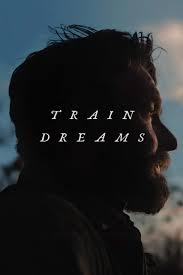
The movie, a Netflix original, sticks tightly to the book. Robert is a soft-spoken, hardworking man, at odds with the anti-Chinese racism of the time period, haunted by some of his own moral failings. He is often away from his family, working at various job sites. Besides the lumber industry, he works at building railroad bridges, which are notably irrelevant only a couple of decades later.
When Robert loses everything, he’s burdened with grief and completely alone, trying to rebuild his meager life with no wife, no family, and no prospects. He is utterly lost. Even his Bible at the house had burnt, prompting him to think that “if the Lord had failed to protect even the book of his own Word, this proved to Grainier that here had come a fire stronger than God.” (Quote from the novel, Denis Johnson.)

From this rock-bottom place, in his tragic and beautiful story, we see perseverance and pain. But more than anything, we see healing… through connection.
There are two distinct moments where Robert Grainier heals from the awful loss and hardships of his life. First, he makes a connection with a local man, Ignatius Jack, who helps him rebuild a physical life. Secondly, he takes a job as a carriage driver, chauffeuring people from town. In this profession, he feels more connected to the community, to the land, and begins to rebuild his emotional life.
We see Robert Grainier walking through the forest often, believing in and sensing the spirit of his wife and child. The film ends with his gentle passing, with no heirs, and flashes back to his first-ever ride on an airplane, where “as he misplaced all sense of up and down, he felt, at last, connected to it all.” (Quote from the movie.)
In Grainier’s life, we see a vital lesson: Nobody heals alone. It takes community. It takes connection.
And secondly: Nobody is ever truly gone. Sometimes, they’re resurrected through memory. And other times, maybe just as powerfully, it’s through storytelling.
Hamnet
Secondly, and most powerfully, Hamnet is a historical fiction that blends Shakespeare (both the person and the writer), witchcraft, and tragedy to tell a beautiful story with a similar lesson. (Quite frankly, I could talk about this movie for hours. I’ll try to keep it brief.)

First, an interesting note: The story is clearly about Shakespeare, with some fictional elements added, but it’s also told like Shakespeare. We see powerful soliloquies. A character arrives by horseback only moments too late. The acting performances are astronomical, and the script is as well-written as anything I can remember. All of this echoes what makes Shakespeare so great. (Is it too click-bait to say that he was the Hamilton of the 1500’s?)
But more importantly, the story is about, once again, love and loss. Shakespeare and his wife and their family… which is perfect and ideal, for a time. When his son, Hamnet, dies tragically — again, sprinkle in a few doses of witchcraft and near-horror tropes — everything falls apart. Their marriage. Their family.
At this point, Shakespeare’s career, which often takes him far from home, threatens to undo everything else in his life. His wife, Agnes — Jessie Buckley giving the performance of a lifetime — is crushed under the weight of everything. Previously in the film, we saw Shakespeare as a tortured artist. Now, we see him as a tortured husband and father.

In one of the bleaker moments, she shouts that nobody understands how she feels. Not William, not anybody. And helplessly, he leaves the family once again, returning to London.
In another Shakespeare staple, there is an unspecified time jump that happens abruptly. But clearly, things have not improved. The family is fractured, even as their status rises. As wealthy as can be, Agnes still is visibly broken and alone. Jessie Buckley plays every progression of Agnes perfectly, but this especially: She is only a shell of a person.
The massive moment of healing comes through a performance of Hamlet, written in memory of his son. Agnes watches, almost reluctantly, and at first she’s furious. The scene itself is too complex to fully describe, but it’s absolutely a must-watch moment of the year. More importantly, the theme: Healing.
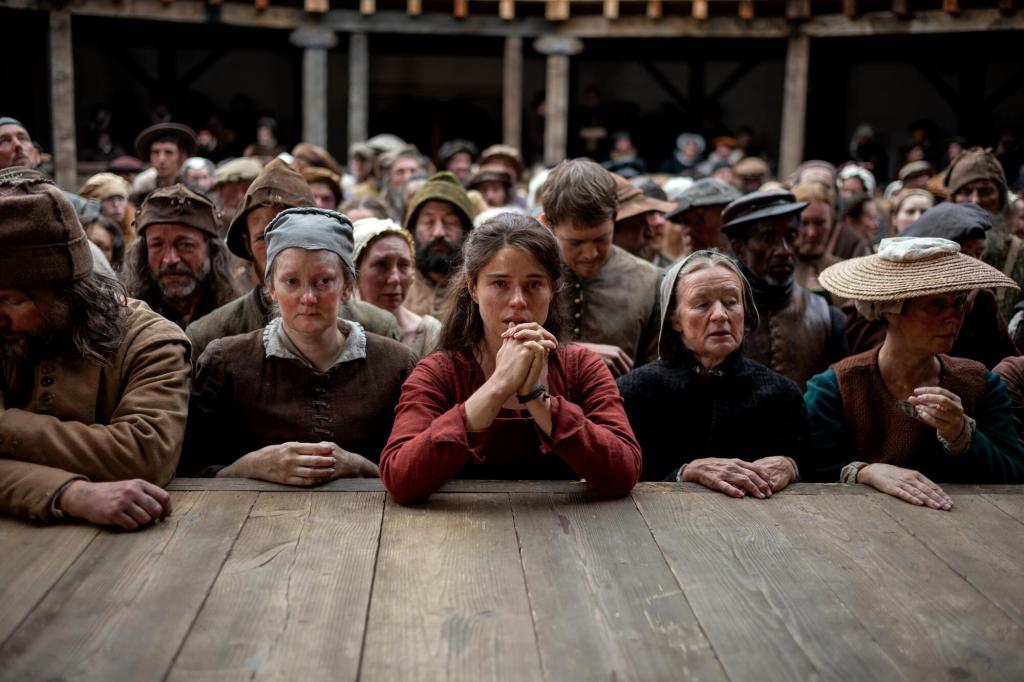
After suffering for years, she watches the play (at a well-done reconstruction of the Globe Theater.) And ultimately, it frees her, as well as redeems her husband. This shared theater experience restores something in Agnes. It’s about the power of storytelling, of fiction, but also of community and connection.
As she watches the performance — which itself is an A+ adaptation — the crowd around her mourns for Hamlet. And Agnes realizes what William has done: Previously, she felt alone because nobody understood. And now, he has made everyone — through the use of theater; as closely as possible — experience what she did. He has built a community for her through a play. It’s absolutely incredible.
In Conclusion
I could say a lot more about both of these movies, especially Hamnet. The scene where he and the kids act out a little theatrical moment for Agnes? When he choreographs a swordfight with his son? When Agnes gives birth in the woods? I mean… Holy crap.
But I want to focus on my overall point, a lesson from both movies (and you can even work in Frankenstein to this.)
Simply put: Nobody heals alone.
Whether it’s small talk on a carriage, or lonely walks into the forest, or a live performance, a chance to exhale grief, these stories make one thing clear. Any amount of grief, no matter how devastating, is never permanent. People are never truly gone — whether resurrected through memory or fiction — and nobody heals alone.


Both films sound wonderful. I’ll look out for them. Thanks for bringing them to our attention.
LikeLike